
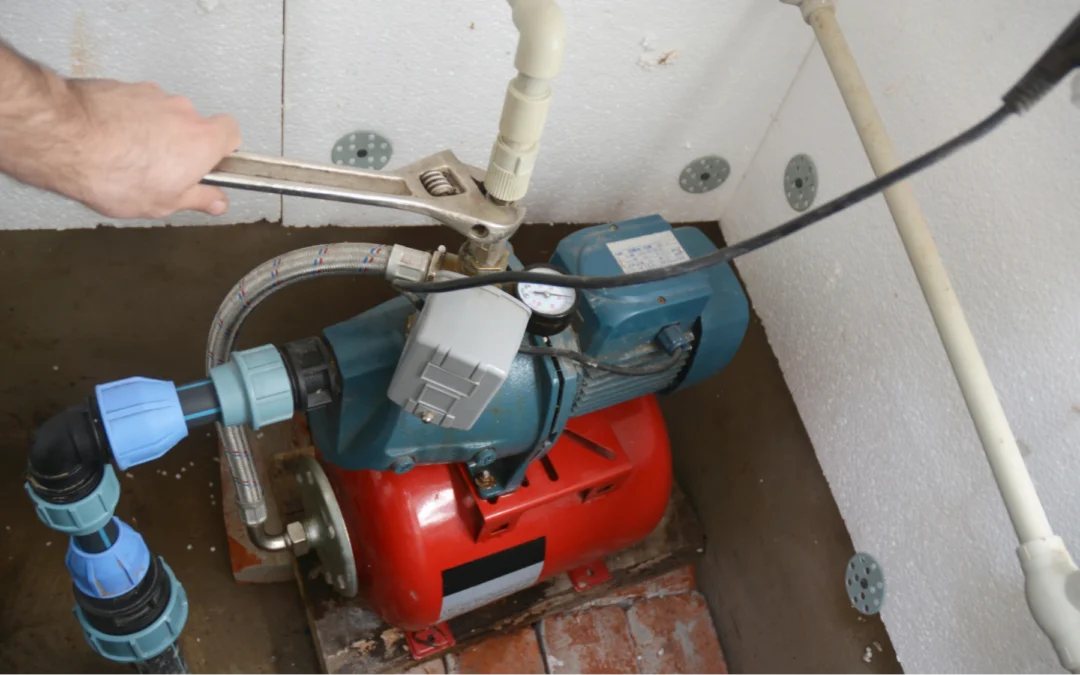
Short answer: you probably need a sump pump if your home has a basement or a crawl space that takes on water, sits at the low point of your lot, or smells damp after a hard rain. Homes built on a slab with good grading usually don’t. Metro Atlanta sits on dense red clay that holds water instead of letting it drain, so groundwater tends to pool against foundations and look for a way in. This guide walks through the warning signs worth taking seriously, which houses around Roswell, Alpharetta, Marietta, and Milton genuinely benefit from a pump, what sump pump installation in Atlanta actually involves, and how to keep the thing working when you need it most.
What a Sump Pump Actually Does (and Where That Water Comes From)
A sump pump is a simple machine doing an unglamorous job. It sits in a pit dug at the lowest point of your basement or crawl space. Water collects in that pit. A float switch rises with the water level, the pump kicks on, and the water is pushed out through a discharge pipe that dumps it well away from your foundation.
The water usually isn’t coming from a leak inside your house. It’s groundwater. After a heavy August thunderstorm, rain soaks into the yard and moves downhill through the soil until it hits your foundation wall. Clay makes this worse because it doesn’t absorb much. Water sheets across the surface, collects in low spots, and then sits there pressing against your basement wall looking for a crack or a seam.
That pressure has a name: hydrostatic pressure, and it’s persistent. Concrete is porous enough that water works its way through over time. A sump pump doesn’t stop the water from arriving. It just gives it somewhere to go besides your floor.
Signs Your Atlanta Basement or Crawl Space Is Trying to Tell You Something
Most homes give you warning long before you’re standing in an inch of water. Worth checking for:
- A musty smell: in the basement or coming up through floor vents, especially in humid months
- Efflorescence: the chalky white residue that shows up on foundation walls after water passes through the concrete
- Water staining: along the bottom few inches of the walls or around the base of support columns
- Rust: on the legs of anything metal sitting on the concrete floor
- Buckled flooring: peeling paint, or drywall that’s soft near the baseboard
- Standing water in the crawl space: plastic vapor barrier with puddles sitting on top of it
Cracks in the foundation floor matter too, particularly hairline cracks that darken after rain. If any of those are showing up, it’s worth ruling out a plumbing source before assuming groundwater. A supply line weeping behind a wall produces a lot of the same symptoms, which is one reason professional leak detection is often the first step rather than the last.
Which Homes Around Roswell, Alpharetta, and Marietta Really Need One
Not every house does, and anyone telling you otherwise isn’t paying attention to your lot.
You’re a strong candidate if your home has a finished or partially finished basement, sits at the bottom of a sloped lot with neighbors’ yards draining toward you, or has a crawl space that stays damp through the summer. Older homes in Marietta and parts of Roswell built before modern foundation waterproofing became standard are frequently on this list. So are properties near creeks and drainage easements, which is a lot of North Fulton.
You’re probably fine without one if your home is on a slab, your lot drains away from the foundation on all sides, and you’ve never seen moisture where it shouldn’t be. Grading and gutter extensions solve a surprising number of basement moisture problems without any equipment at all. If your downspouts are dumping water three feet from the wall, start there.
The gray area is the crawl space home that gets water once or twice a year. That’s a real judgment call, and it depends on what’s stored down there, whether your HVAC equipment sits in the crawl, and how much mold risk you’re willing to carry.
What Sump Pump Installation in Atlanta Involves, Start to Finish
The work itself is straightforward when the site is right. A plumber locates the low point, cuts and excavates a pit through the concrete slab, sets a liner, and packs gravel around it. The pump goes in, gets wired to a dedicated GFCI outlet, and connects to a discharge line that runs outside and away from the house. A check valve keeps the water that just left from sliding back down into the pit.
Where it gets more involved is the discharge routing. Georgia code and most municipalities don’t allow sump discharge into the sanitary sewer, so that water has to go somewhere legitimate on your property, ideally at least ten feet from the foundation and not onto your neighbor’s lot. On tight lots, that’s the part that takes planning.
Cost varies widely based on whether a pit already exists. A straight pump replacement in an existing pit is a modest job. A full installation involving concrete cutting, a new liner, and a long discharge run costs considerably more. Get the quote itemized so you can see which parts of the work are driving the number.
Pedestal or Submersible, and Why the Battery Backup Matters Here
Two basic designs. A pedestal pump keeps the motor above the water on a column, which makes it cheaper and easier to service but noisier and less powerful. A submersible sits down in the pit, runs quieter, moves more water, and handles debris better. For most Metro Atlanta basements, a submersible is the better call.
The backup question matters more than the pump style. Severe thunderstorms take power lines down, and the moment you most need the pump running is often the moment the power goes out. A battery backup system runs the pump for several hours on its own. Given how often summer storms knock out service in this area, skipping the backup defeats a fair amount of the purpose. A water-powered backup is another option if you’re on municipal water with good pressure.
Keeping Your Sump Pump Running Through Georgia’s Storm Season
A sump pump that hasn’t run in eight months is not a sump pump you should trust. Twice a year, pour a five-gallon bucket of water into the pit slowly and watch what happens. The float should rise, the pump should engage, and the pit should empty. If it hums without pumping or cycles on and off rapidly, something needs attention.
Also check the discharge outlet outside for blockage from mulch, leaves, or a wasp nest, and clear debris from the pit itself. Test the backup battery every spring. Adding a sump check to your summer plumbing routine takes about ten minutes.
If the pump fails during a storm and water gets in anyway, speed determines how bad the damage gets. Twenty-four to forty-eight hours is roughly when mold starts, which is why fast water extraction matters more than most people expect.
Your Sump Pump Questions, Answered
How long does a sump pump last?
Around seven to ten years for most residential units. Pumps that run frequently wear out sooner. If yours is over a decade old and you have a finished basement, replacing it before it fails is cheaper than replacing it after.
Can I install a sump pump myself?
You can, but the parts that go wrong are expensive. Cutting into a structural slab, wiring a dedicated circuit, and routing discharge in compliance with local code are all places where a mistake creates a bigger problem than the one you started with. Permit requirements vary by county in Metro Atlanta.
Do homes on a slab foundation need a sump pump?
Usually not. Slab homes have no below-grade space for water to collect, so drainage and grading fixes address most moisture issues. The exception is a slab home with a subfloor drainage system already in place.
Will a sump pump lower my home’s humidity?
Indirectly, yes. Removing standing water from a crawl space or basement cuts the moisture feeding into the air, which helps the whole house. Pairing it with a vapor barrier and dehumidifier makes a noticeable difference in older Roswell and Milton homes.
What happens if my sump pump fails during a storm?
Water rises in the pit and eventually spills onto the floor. Shut off power to the basement if water is approaching outlets or equipment, then call for emergency plumbing help. Every hour of standing water raises the repair cost.
Staying Ahead of the Next Big Rain
A sump pump isn’t the right answer for every house in Metro Atlanta, and it’s worth being honest about that. But if your basement smells damp, your crawl space collects water, or your lot sits at the bottom of the hill, the question isn’t really whether water will show up. It’s whether you’ve given it somewhere to go.
Not sure which category your home falls into? The team at Busted Pipes Plumbing can take a look at your basement or crawl space, check where the water’s actually coming from, and tell you straight whether a pump makes sense for your property. Reach out to schedule a visit anywhere in Roswell, Alpharetta, Marietta, Milton, or the surrounding Metro Atlanta area.