
Few words strike fear into a homeowner like “slab leak.” It’s the kind of plumbing problem that hides under your foundation, quietly running up your water bill and threatening the structural bones of your home. By the time most folks realize what’s happening, the damage is done and the repair quote is jaw-dropping.
If you own a home in Roswell, Alpharetta, Marietta, or anywhere else in Metro Atlanta, slab leaks are worth knowing about. Plenty of homes built from the 1980s onward sit on concrete slabs, and our clay-heavy Georgia soil doesn’t always play nicely with the pipes buried underneath. This guide walks you through what a slab leak actually is, what it costs, the warning signs to watch for, and how to protect your home and your wallet.
What Is a Slab Leak and Why Are They So Costly?
A slab leak is a leak in one of the pressurized water lines running through or beneath the concrete foundation of your home. These pipes carry hot or cold water into your house, and when one springs a leak, the water has nowhere to go but into the soil under your slab or up through the concrete itself.
Slab leak repair costs typically range from about $500 for a simple spot fix to $15,000 or more if your home needs rerouting or full repiping. Detection alone usually runs $150 to $400. Add in flooring, drywall, and restoration work, and the total bill can climb past $20,000.
The reason slab leaks are so expensive comes down to access. A plumber can’t just walk up and tighten a fitting. They have to pinpoint the leak, decide whether to break through the slab or reroute around it, and then put your home back together once the pipe is fixed.
What Causes Slab Leaks in the First Place?
Most slab leaks come down to a few culprits, and Atlanta homes are vulnerable to nearly all of them.
Pipe corrosion is the biggest one. Copper pipes, especially in homes built before the 2000s, develop pinhole leaks over time as minerals in the water eat away at the metal from the inside out. Hot water lines tend to fail first because heat accelerates corrosion.
Abrasion is another common cause. When pipes shift slightly with thermal expansion, they rub against the concrete, gravel, or rebar packed around them. Years of that friction wear a hole right through the copper.
Then there’s soil movement. North Georgia’s red clay swells when it’s wet and shrinks when it’s dry, which puts steady stress on anything buried in it. Mix in the dramatic moisture swings between humid summers and dry winter stretches, and pipes can crack or pull apart at joints. High water pressure (anything above 80 PSI) puts extra strain on the system, and pipes under the slab take the brunt of it.
Warning Signs You Might Have a Slab Leak
Catching a slab leak early can save you thousands. Here’s what to watch for:
Warm spots on your floor are one of the clearest signs of a hot water slab leak. If you walk barefoot across the kitchen or hallway and feel a patch that’s noticeably warmer than the surrounding floor, heated water is escaping under the concrete.
A spike in your water bill with no clear reason is another red flag. If your usage has been steady for months and suddenly jumps 30 to 50 percent or more, water is going somewhere you can’t see.
The sound of running water when no faucets are open is a giveaway. Walk through your house in total silence and listen near the floor. A faint hiss or rush points to pressurized water escaping somewhere it shouldn’t be.
Other slab leak symptoms include low water pressure, hairline cracks appearing in tile or drywall, mildew smells with no visible source, and damp or buckling spots in flooring. None of these alone confirms a slab leak, but together they paint a pretty clear picture.
How Plumbers Find a Slab Leak Without Wrecking Your Floors
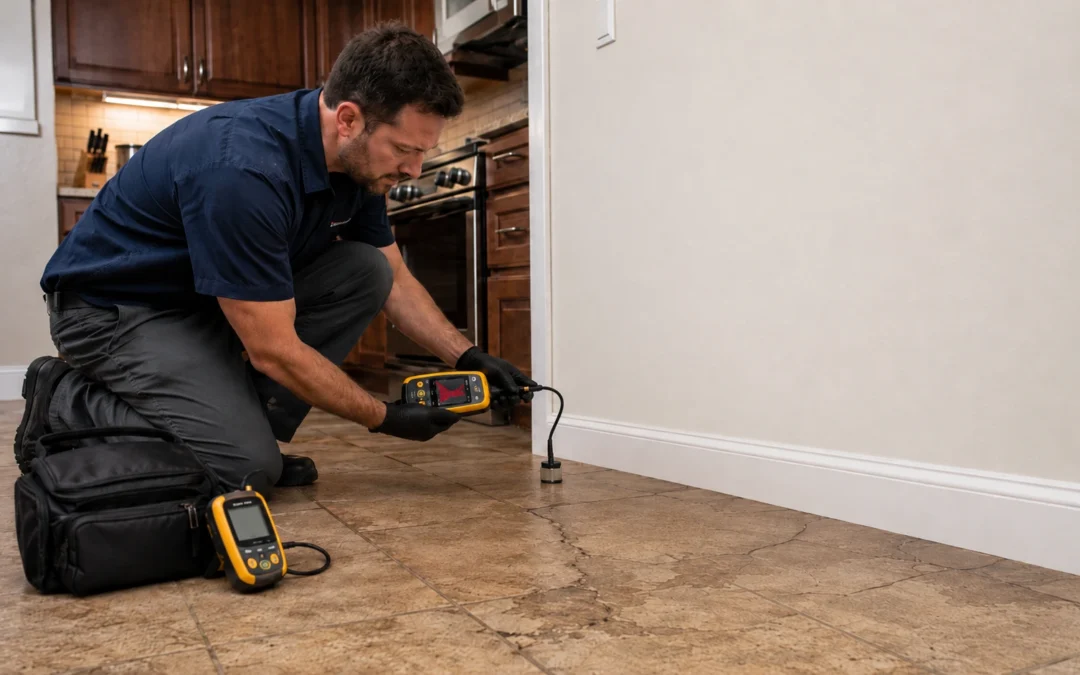
The fear of jackhammering through your kitchen tile is real, but modern detection methods rarely require any demolition to locate the leak. Licensed plumbers use electronic acoustic listening devices that pick up the sound of water escaping under pressure, even through several inches of concrete. Pressure testing isolates which line (hot or cold) leaks. Infrared thermal imaging spots temperature differences on the floor that point to a hot water leak.
Slab leak detection costs in the Atlanta area generally fall between $150 and $400, depending on how tricky the search is. It’s money well spent because guessing wrong on the location means breaking concrete in the wrong spot.
Slab Leak Repair Methods (and What Each One Will Run You)
Once the leak is pinpointed, you’ve got a few repair routes to weigh.
- Spot repair is the most direct option. The plumber breaks through the slab right above the leak, replaces the damaged section of pipe, and patches the concrete. Cost runs around $500 to $2,500. It works well for a one-off pinhole leak in a copper pipe, but it doesn’t address aging pipes elsewhere in the system.
- Pipe rerouting abandons the leaking line and runs a new pipe through the walls or the attic to bypass the slab entirely. This works great when you’ve got a single problem line and want to avoid breaking the foundation. Expect $1,500 to $4,000, depending on the run.
- Epoxy pipe lining coats the inside of existing pipes with a resin that seals small leaks and protects against further corrosion. It’s less invasive than repiping and typically runs $4,000 to $10,000.
- Full repiping replaces all the underground lines, usually by rerouting fresh runs through walls and ceilings. It’s the most expensive option at $4,000 to $15,000, but if your pipes are original to a 30 or 40-year-old home, it’s often the smartest long-term move.
Will Homeowners Insurance Cover a Slab Leak?
This depends entirely on your policy, but here’s the general pattern. Most homeowners’ insurance policies cover the resulting damage from a slab leak (water-soaked drywall, ruined flooring, mold remediation) but not the cost of repairing the pipe itself or the work to access it. Some policies explicitly exclude slow leaks or damage chalked up to wear and tear.
Call your insurance company before any work starts, document everything with photos, and ask whether your policy includes service line or water damage endorsements. The answer can shift the financial picture in a big way.
How to Prevent a Slab Leak Before It Starts
You can’t control everything, but you can stack the odds in your favor. Install a pressure regulator if your incoming water pressure is above 80 PSI. Have your water tested for hardness and corrosive minerals, and look into a whole-home water softener or filtration system if those minerals are eating your pipes. Schedule periodic plumbing inspections, especially if your home is more than 20 years old. Watch your water bill month over month so you spot anomalies fast.
If you’re buying an older home in Marietta or anywhere across Metro Atlanta, ask the inspector to specifically check for slab leak warning signs during the walkthrough. The team at Busted Pipes Plumbing also offers preventive plumbing inspections that catch trouble before it costs you a foundation.
Your Slab Leak Questions, Answered
How long can a slab leak go undetected?
Some slab leaks run for months or even years before anyone notices, especially slow drips that never visibly surface. That’s why warm floor spots and unexplained water bill increases deserve immediate attention.
Can a slab leak cause foundation damage?
Yes. Continuous water under a slab erodes soil, creates voids, and can lead to foundation settling, cracks, and shifting walls. The longer it goes, the bigger the structural risk.
Are slab leaks common in newer homes?
They can happen in homes of any age, but homes built from the 1980s through the early 2000s with copper piping see them most often. Newer homes built with PEX are less prone to corrosion-related leaks.
Should I try to fix a slab leak myself?
No. Slab leak repair takes specialized detection equipment, knowledge of local building codes, and often permits. A DIY fix usually makes the damage worse and can void your insurance claim.
Does a slab leak affect home resale value?
A repaired slab leak with proper documentation usually isn’t a deal-breaker, but it has to be disclosed in Georgia. Catching it and fixing it correctly before listing protects your sale price.
Don’t Let a Hidden Leak Drain Your Home and Your Bank Account
Slab leaks are intimidating, but they’re beatable when you know the signs and act fast. If you’ve noticed warm spots, a strangely high water bill, or that ghostly running water sound, don’t wait it out. The earlier the diagnosis, the smaller the repair.
Busted Pipes Plumbing has helped homeowners across Roswell, Alpharetta, Marietta, and the rest of Metro Atlanta detect and fix slab leaks with minimal disruption to daily life. Reach out today to schedule a professional slab leak inspection and get straight answers about what’s going on beneath your floor.